Wednesday, February 10, 2010

Onward in the Corners

Here it is 2010. Can you believe that? Even a month into the year it's still hard to wrap my head around it. Is there another year yet to come that has received a lot of fictional press? I don't know any--I'm ignoring supposedly real apocalypse dates. Not only is 2010 a new year, but also more than that it's a new decade. Somewhere along the line I'm sure that I will post something about the future of books or writing and multimedia together or similar. It won't be the first time and as long as things keep changing and evolving in the world it likely won't be the last. Some of the articles I intend to write this year are not very dark or horror oriented but don't let that get you down. Some of them I will take special care to make dark and horror-filled.

One of the first topics I want to tackle will be in a sort of pseudo-series. I do not know how many weeks it will take or if I'll do them all at once or not. They are focused on role-playing game writing and use. The main thrust of these will be about the artificial quality of some rules that games have, and ways of avoiding that, hiding it, or otherwise minimising it. I also want to take a look at the ubiquitous and attention hogging vampire. This was a number of ideas, spawned by recent movies and a novel I have knocking around in the back of my head, to really make vampires something to fear again. Before I get to that though we need to look at how they are portrayed now. I also have to cover a bit about some of the myths that have fallen by the wayside and some that are only partially explained.

Back to that idea about the future of writing and the possible changes, I would like to write an article or two further getting into this whole idea of deleted and alternate scenes as well as side stories. The thing about this idea is it is only new in that--especially in the case of side stories--they existed separately before and now they can co-exist. The important part of this topic that I want to get to is about using the bits that exist in the story to set the mood, or to contrast it. How do you set that up? How does the full version change things? Are those changes present elsewhere and just quietly inserted? Of course any of these kinds of ideas could be full-blown articles all on their own. I hope you'll stick around to see.

Mood: optimistic.
Music: Music: Big Guns by Skid Row and Snakebite by Alice Cooper.

Skid Row: Skid Row
Or get MP3s.
Buy these at Amazon.com
Click Images to Buy CDs
Alice Cooper: Hey Stoopid
Or get MP3s.

Labels: , , , , , , ,

Wednesday, May 13, 2009

Practical Lawn Mowing and Red Glass Doorknobs

The following article contains spoilers for The Lawnmower Man (1992) and The Sixth Sense (1999).  If you have not seen either of these films and wish to see them unhindered of foreknowledge please return back to read us next week.  Thank you.

Impressions and insinuations can be an important part of the story telling process.  As much as writing is best when it shows not tells there are different ways to show ideas and concepts.  Scenes where some fact is apparent but unspoken, the elephant in the room as the saying goes, are effective on different levels.  They can be very illustrative of the story's reason for the scene and at the same time demonstrative of different points both in line with the scene's raison d'être and counter to it, or at least on a different vector.  What happens when the proverbial elephant is camouflaged and nowhere to be scene, but still, say, smelled?  The taint is still there.  When the illusion of the camouflage is pierced and the information revealed understanding shifts.

Anyone who has seen the two versions of the movie The Lawnmower Man has seen the difference that a few extras scenes can make.  The director's cut of the film presents some characters different than the theatrical version does.  Father McKeen is more balanced character, caring as well as abusive of Jobe.  In the longer cut Mrs. Angelo is less abrasive and more sympathetic.  She doesn't leave half way through the movie never to be seen again.  Her shooting death by The Shop agents is stronger justification for Dr. Angelo's shock and horror than Jobe's disassembly of the agents.  These small changes smooth out the film, provide deeper characters and alter emotional undercurrents.  The two versions are different and divergent, something that can be put to greater use.

The Sixth Sense does not rely on deleted scenes.  It changes the meaning of scenes and revises events in the audience's understanding in flashbacks after the revelation that Dr. Crowe is dead.  Scenes play out exactly the same; same characters, same events, same outcomes, and same dialog.  The meaning though is different because of the missing information on the first pass through the scenes.  The situation that makes this reality shift happen is very specific in the Sixth Sense and all pointed toward Crowe's condition.  This need not be true in every case.  There is great leeway afforded by not hinging the changed meanings on a single twist but on several scenes and varied alterations.  This process can all be geared toward a particular story type or used to enhance any type.

Mood: predatory.
Music: Know Your Enemy by Green Day and You Give Love A Bad Name by Bon Jovi.

Green Day: 21st Century Breakdown
Or get MP3s.
Now at Amazon.COM NOT CA.

Buy these at Amazon.com
Click Images to Buy
Bon Jovi: Slippery When Wet
Or get MP3s.

Labels: , , , , , , , ,

Wednesday, May 06, 2009

What Is Not There Now Is

Last week the discussion revolved around footnotes, endnotes, and other forms of annotation possible with e-books.  It ended with mention of DVD-style extras, such as deleted scenes, and ancillary information in novels.  The first question the idea of deleted scenes being shipped out with a book is why?  If the scene was worthy of inclusion in the book why is it not directly included?  There are a few reasons for this.  In writing circles there is something referred to as killing your darlings.  It is something that comes in up when authors are asked about how they write, and editors in what they do beyond error checking and sprucing up with a word change here and there.  It refers to cutting out your favourite scenes in your books because though they are cool they do not serve a purpose.

The caveat usually missing from these discussions is that there have to be many times where an author's favourite, darling, scene does serve a purpose and thus would not be cut out.  In general there is a second flaw to these discussions; the usefulness of scenes is equated to the plot.  Not every scene needs to be important to the plot and were it so things such character development and defining important parts of the setting would be neglected unless they added to the plot immediately.  Pacing is another factor that can be important rather than focusing the direction of everything toward the plot in what is usually an increasing frenzy.  Raising the bar on tension and action is a powerful tool for an author but contrast and breathing space shouldn't be neglected either.

Beyond non-plot involvement these deleted scenes may have been deleted because they affected the pacing of the story.  Movies often cut scenes to fit a specific run time, or because they slow down the pace.  On a different tangent the events showed too much too soon, were too intense, or otherwise were better suited until later in the narrative, but of course are tied to events in their original position.  These deleted scenes are included in the extras because the director likes them.  They are interesting or they add a new dimension to the story.  Dimension adding options can include features like sub-plots, and bits of characterisation not pertinent to the plot.  Come back next week and get closer to the answer to why include these scenes outside of the natural flow of the story?

Mood: even.
Music: Hallucinate by Def Leppard and Mama Weer All Crazee Now by Quiet Riot.

Def Leppard: Songs From The Sparkle Lounge
Or get MP3s.
Now at Amazon.COM NOT CA.

Buy these at Amazon.com
Click Images to Buy
Quiet Riot: Condition Critical
Or get MP3s.

Labels: , , , , , , , ,

Wednesday, December 03, 2008

Anatomy of a Horror Setting #3-4: Cybernetically Enhanced Horror

I have personal experience with cyberpunk horror. My first consideration was not deciding why put horror into a cyberpunk story. The base storyline was in place and the main characters were set. A strong sense of urgency was missing though. The story needed punch. Oddly enough the sense of overpowering dread was lost with the level of hopelessness and desperation that the story had. What it needed was a shot in the arm, something to kick the horror up a notch. That horror boost came from the sense of security mentioned last article. It came not just in shattering that greater security than a modern setting held. The danger, the fear in facing the horror of such a plot and antagonist was actually heightened by grounding it versus the best that science and ballistics could offer.

The science fiction nature of the cyberpunk milieu allows for the characters, and the reader, or viewer, with them to share a moment of dawning terror without stepping over the line into the usual impossible odds ethos of Lovecraftian horror for example. The horror is greater because it is less of a man vs. nature conflict. It takes away the resignation that the end is inevitable. It leaves room for hope. Hope that is then crushed. The horror is kept fresh and within arms length. It is much more satisfying to pit characters of skill and power against something that ultimately terrifies them than it is for the everyman. That which frightens the usually fearless, or appals the morally bankrupt, is something with which to be reckoned. At least this is true with the right set up and the right situations.

It is easy to slip away from the horror into a more action-oriented mode where the importance is placed on survival more than dealing with the cause and coping with the fear elicited by the situations. The conventions of cyberpunk can be used to add different layers of horror. The dystopian nature, moral grey areas, and the tough choices arrayed before the protagonist can be bent to psychological horror. Good and evil are strained and skewed. The cultural commentary brought to life by the dark science can be darkened further by the horror elements added. Greater depth, and nuance, is possible when adding cyberpunk’s essential layer of man vs. himself conflict, and setting that against or in contrast to the external conflict. Personal horror of oneself could even in itself be a goal.

Mood: retro.
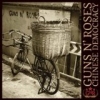
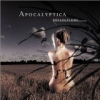
Music: Better by Guns N' Roses and Toreador II by Apocalyptica.

Guns N' Roses: Chinese Democracy
Buy these at Amazon.ca
Click Images to Buy
Apocalyptica: Reflections

Labels: , , , , , ,

Monday, July 09, 2007

Seasons and Spaces in Time

I was just thinking about how I like to specify a timeframe in my stories. Sure you can set the year and affect many facets of the story. What I like even better is to deal with things a bit more specific and that is by choosing a season. The first thing that this affects is the weather. Now I'm not super big on this whole weather and atmospherics should mirror the mood of the story. Certainly at the least I'm more of a contrast kind of guy. However I think the weather, should it be an issue—which it will any time a story takes place outside—should be whatever makes the story more interesting. It shouldn't be just a gimmick or a function of mood already established without it being present.

My personal preference of season is, as many may already know, autumn. Certainly it lends itself to the horror genre even without its connotations that Halloween can't be far away, or far back. I won't go into detail of just what it says with its colour changing trees, or after that's done the dry leaves that skitter with their menacing sound in the stillness of the night. Of course I don't use autumn all the time. That would be against everything I said up above. Again I use what best serves the story. More than the weather, the season expressed in a story is dependent upon the characters with or without the plot. People do certain things during certain seasons. Those things may be a part of the plot or they may not. Certainly I like to mix things up whether they parallel or contrast or just are independent.

Mood: bored silly.
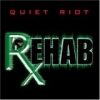
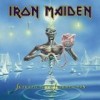
Music: Black Reign by Quiet Riot and Prophecy by Iron Maiden.

Quiet Riot: Rehab
Buy these at Amazon.ca
Click Images to Buy
Iron Maiden: Seventh Son of a Seventh Son

Labels: , , , , , , ,