Wednesday, February 03, 2010

Looking Back at 2009

It's February, but since this is the first entry of the year to this blog I would like to say, Happy New Year. I thought this year that I would begin all of my blogs with two particular articles. The first is a look back at 2009 and the highlights of the year. The second is a look forward at some of the things that I want to talk about in 2010. One of the perennial series of entries in these dark corners is the annual 13 Nights of Hallowe'en. In 2009 all of the movies were my favourites. Most recently I wrote a couple of role-playing game themed articles that are useful for creating characters for any media. Still in the RPG vein there were articles about game changing alterations to settings, such as travel times and instant communication, which can have massive impact on a number of fronts even outside of gaming.

At one point in the year there was a bit of a lengthy look at changing perspectives, and perspectives versus reality on several levels. That got into the realities that we surround ourselves in and they way that it affects, well, everything. Those perspective shifts work their way beyond our view of the world and they effect our interactions with everyone--a handy understanding for writing. Another topic that surfaced with a need to be covered by more than one entry was a look at where publishing is going and where the writer can take their work as new paradigms emerge. There I likened one of the possible experiences, with only text being a requirement, to extras and deleted scenes on a DVD. That plays into my favourite topic of taint, which comes up now and again and will continue to do so.

It’s hard to forget as well that at the beginning of 2009 there were the last couple parts of Anatomy of a Horror Setting #3 about mixing the horror and sci-fi genres. That of course was followed by all of Anatomy of a Horror Setting #4, which looked at combining horror and fantasy moving from the typical medieval European fantasy settings up to Industrial Era settings. The rest of the series of course was a part of 2008. The whole set of them are still on my list to be lengthened, re-edited, and turned into a book. It was both easy and hard to devote so many weeks to a small set of topics and examine all of the angles. It was easy in that I knew one week to the next what I writing about and hard to come up with some of those angles and try to keep some kind of order in the progression.

Mood: progressive.

Music: Music: This Day We Fight! by Megadeth and Hitchin' A Ride by Green Day.

Megadeth: Endgame
Or get MP3s.
Buy these at Amazon.com
Click Images to Buy CDs
Green Day: Nimrod
Or get MP3s.


Labels: , , , , , , , , , ,

Wednesday, August 12, 2009

Conceptions, Intuition, and Truthiness

The other day the following interesting article came to my attention. It was titled "Would You Wear a Serial Killer's Sweater?" It also asked, and I asked again on Twitter, "Would you fear the volunteer who did put on the sweater?" All sorts of factors surrounding social interactions, concepts of what is real and what isn't, intuition about what's real, among others, come into play in this discussion. This is a different tack toward the same kind of idea being explored here lately. All of them come together to build connections between the characters in a story, the plot, and both the expectations and impact upon the audience of the work. Many narratives carry one singular reality, whether or not it is an exact replication of the real world or something very fantastical and different.

How does the sweater play into this? First it does not matter that it is not actually a serial killer's sweater. The insinuation or claim that it is such is enough on its own. Likewise it does not matter that the item is laundered. It still carries the connotations as if it were still stained with the blood of the killer's victims. The idea makes people nervous and uncomfortable. Its proximity causes anger in some even before the outrageous request for someone to don it. It is a tainted item. Worse, that taint may rub off. Conceptually it is an artefact of evil. Fascination with it, shown by taking the offer to wear it, points to the evil nature of that volunteer. It is something that should be reviled and likely feared. Those not espousing such emotions are questionable. Or so the theory goes.

It is a gut instinct, an emotional response that the sweater is bad. This is the same intuitive sense people have upon learning of a person's criminal record. It is of course worse if the intuiting person is familiar with the exact crime, and hard to look past if it was violent. This all begs the question, which is more important, actual fact, or just perception of the truth of something? That word truthiness, trite as its origins are, and frightening as the concept is, seems to sum up the answer to that question as today's society would answer it. Perception is everything in a large segment of the population. This is something that can and should be capitalised on in fiction. It comes up on this blog more than once for a reason. It is depth well used for characterisation, direct plot, and secondary conflict.

Mood: airy.
Music: The Unforgiven III by Metallica and Inconclusion by Dee Snider.

Metallica: Death Magnetic
Or get MP3s.
Now at Amazon.COM NOT CA.

Buy these at Amazon.com
Click Images to Buy
Strangeland: Movie Soundtrack
Or get MP3s.

Labels: , , , , , , , ,

Wednesday, May 27, 2009

One Step Around the Corner

Creators of genre fiction do not deal with regular everyday reality.  For example, noir or westerns, both of which could be entirely rooted in the real, will not remain there entirely.  There is some shift to the side.  There are considerations for mood.  There are considerations for genre conventions.  There are even considerations for author bias.  Those biases can take the form of the political, patriotically cloaked, and bigoted type discussed last week.  They can be less inappropriate biases than those too.  Then there are the personal biases formed in the direction of enjoyment and excitement where the creator enhances certain aspects for a better story in keeping with their own wants and desires in entertainment.  The bias may also be theme or message related.

Bigoted bias need not be about race or religion.  Some biases are economic--the rich versus the poor.  Some are intelligence motivated--leaning toward the literati or the cognoscenti and away from the ignorant and uneducated.  Some, perhaps too many, are directly political within the same country--Republican versus Democrat, Liberal versus Conservative, Left versus Right.  There is also the one-sidedness and accompanying struggle between capitalism and socialism.  Any of these, singularly or in tandem, form the basis of numerable character archetypes.  In turn these characters confer their views onto the narrative.  This is true whether one or more of them provide the narrative voice or there is an unrelated narrator.  That is unless that narrator provides voice, comment, or contrast otherwise.

Here is where the bias may be purposeful within the narrative.  A story's theme, or the message it looks to convey to the audience, it's very raison d'etre, can exist to illustrate, shine a bright spotlight on the injustice of such a bias, or to perpetuate it. News media isn't the only place where an agenda is pushed by focusing on certain segments of an issue, or group.  Of course angling to create tension within, distort the worldview of, and otherwise negatively influence the audience is a despicable thing to do.  Doing it within the populace of the created fictional world though is an exciting proposition.  Doing it provides the structure upon which to foster enticing plots, character-developing dilemmas, and at the higher level of the audience to forward themes, morals, and message.

Mood: valiant.
Music: Dream Of Mirrors by Iron Maiden and The Gunslinger by Demons & Wizards.

Iron Maiden: Brave New World
Or get MP3s.
Now at Amazon.COM NOT CA.

Buy these at Amazon.com
Click Images to Buy
Demons & Wizards: Touched By the Crimson King
Or get MP3s.

Labels: , , , , , , ,

Wednesday, May 20, 2009

Freedom Fries and Liberty Measles

The points of view to which people ascribed to are often strange things open to change at the fickle drop of a hat or the frightened switch of political winds.  There are a few historical examples of this that were as swift a change as a fad and lasted just as long before otherwise fading into obscurity.  These changes fall under the scope of propaganda and fit in all friendly-like with nationalism of the dark stripe that shares a bed with rank racism.  The case is made in defending choices like these that the opposed lack patriotism, morals, and make even their grandmother's sick.  Side with them or with the so-called enemy, no fence sitting is allowed.  Of course such cowing is never seen as such, and the possibility that it is an overreaction is entirely outside the possibilities of reality.

These points of view changes hinge on transferring ideas, or exchanging them.  A 2003 political disagreement with France, for instance, led American Congress to force menu changes to include items such as 'Freedom Fries', and 'Freedom Toast'.  They could not do away with such iconic foods as such, but the name could certainly be changed.  A rose by any other name would smell just as sweet.  A similar backlash against Germany around WWI led to some people renaming Dachshunds as 'Liberty Dogs' and talk of cases of 'Liberty Measles'.  To untangle the need to change the names from the impression that these are good, wholesome, American things was impossible.  It was convoluted logic to rename the measles rather than use it to lay blame, but the initial base logic was specious to begin with.

The measles example is indicative of the length that was gone to in distancing things.  Changing the name altered its perceived origination and excluded the discoverer's and the disease's heritage.  It also protected any fine, upstanding citizens from the stigma of contracting something from somewhere else, no doubt--in the view of ignorance--from someone who was not so fine or upstanding.  Us versus them paradigms take many forms beyond just these two examples.  They colour and taint perceptions and twist reality subtly.  When they are not so clear, so easily spotted, they can be put to good use to create conflict and tension between characters in plots and settings.  Or in the alternative they can provide otherworldliness to the most mundane of scenes and peoples.

Mood: drained.
Music: Desert Rain by Iced Earth and Ashes to Ashes by Blind Guardian.

Iced Earth: Night of the Stormrider
Or get MP3s.
Now at Amazon.COM NOT CA.

Buy these at Amazon.com
Click Images to Buy
Blind Guardian: Somewhere Far Beyond
Or get MP3s.

Labels: , , , , , ,

Wednesday, May 13, 2009

Practical Lawn Mowing and Red Glass Doorknobs

The following article contains spoilers for The Lawnmower Man (1992) and The Sixth Sense (1999).  If you have not seen either of these films and wish to see them unhindered of foreknowledge please return back to read us next week.  Thank you.

Impressions and insinuations can be an important part of the story telling process.  As much as writing is best when it shows not tells there are different ways to show ideas and concepts.  Scenes where some fact is apparent but unspoken, the elephant in the room as the saying goes, are effective on different levels.  They can be very illustrative of the story's reason for the scene and at the same time demonstrative of different points both in line with the scene's raison d'être and counter to it, or at least on a different vector.  What happens when the proverbial elephant is camouflaged and nowhere to be scene, but still, say, smelled?  The taint is still there.  When the illusion of the camouflage is pierced and the information revealed understanding shifts.

Anyone who has seen the two versions of the movie The Lawnmower Man has seen the difference that a few extras scenes can make.  The director's cut of the film presents some characters different than the theatrical version does.  Father McKeen is more balanced character, caring as well as abusive of Jobe.  In the longer cut Mrs. Angelo is less abrasive and more sympathetic.  She doesn't leave half way through the movie never to be seen again.  Her shooting death by The Shop agents is stronger justification for Dr. Angelo's shock and horror than Jobe's disassembly of the agents.  These small changes smooth out the film, provide deeper characters and alter emotional undercurrents.  The two versions are different and divergent, something that can be put to greater use.

The Sixth Sense does not rely on deleted scenes.  It changes the meaning of scenes and revises events in the audience's understanding in flashbacks after the revelation that Dr. Crowe is dead.  Scenes play out exactly the same; same characters, same events, same outcomes, and same dialog.  The meaning though is different because of the missing information on the first pass through the scenes.  The situation that makes this reality shift happen is very specific in the Sixth Sense and all pointed toward Crowe's condition.  This need not be true in every case.  There is great leeway afforded by not hinging the changed meanings on a single twist but on several scenes and varied alterations.  This process can all be geared toward a particular story type or used to enhance any type.

Mood: predatory.
Music: Know Your Enemy by Green Day and You Give Love A Bad Name by Bon Jovi.

Green Day: 21st Century Breakdown
Or get MP3s.
Now at Amazon.COM NOT CA.

Buy these at Amazon.com
Click Images to Buy
Bon Jovi: Slippery When Wet
Or get MP3s.

Labels: , , , , , , , ,

Wednesday, September 03, 2008

Anatomy of a Horror Setting #2-14: Of Good and Evil

The last section of the previous discussion about things from beyond presupposes that the morality of otherworldly creatures is evil. This is certainly advantageous to the creation of horror, but by no means is it a necessity. Inhuman beings can be starkly good or evil, or they can be more like humans and exist within the grey areas in between to the two. Likewise, horror also can have a distinct preponderance of evil in general. This goes beyond the usual narrative conflict of person versus person, or in many of these cases, person versus the supernatural. In the magical horror setting, more so than the psychic horror setting, the question of morality applies more directly to both the schools of magic as well as to the spells and rituals themselves.

Magic can be thought of as a force of super-nature--beyond nature as we understand it. If magic is such a thing then like gravity or magnetism it is neither inherently good nor evil. In such a framework the morality of magic, and of the spells cast using it, is entirely dependent upon the intent of the being bending the force to his, her, or its will. This need not be the way that magic is approached in a horror setting though. Magic can be something integral to the force of some being’s wills, which doesn’t change its moral dependency on the user. Alternatively magic can be directly a force of evil. It may be born of evil supernatural beings, or is an expression of chaos or entropy, or it may come about because evil is a distinct commodity or force all its own.

Magic need not be a singular force either. It is entirely possible to work with a world/setting view where there are two magical energies, good and evil energies. In such a case it is even more important to consider the power of setting up kinds of resonance between the energy being used, the modes and methods of the rituals, and the emotional state and intent of those harnessing the magic. A physical component such as a ritual sacrifice is then something more than just tapping into a battery. The sacrifice now imparts its qualities to more than just the formula of the spell; it infuses the entirety of the process. This in turn affects other parts of the setting. Following the theory that like attracts like leads to a need for some kind of balance, if only for the safety of the spell caster.

Mood: heavy.
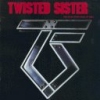
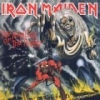
Music: Power and the Glory by Twisted Sister and Children of the Damned by Iron Maiden.

Twisted Sister: You Can't Stop Rock and Roll
Buy these at Amazon.ca
Click Images to Buy
Iron Maiden: Number of the Beast

Labels: , , , , , , , , , ,

Tuesday, August 07, 2007

Post-Climactic Hijinks

R.G. Male ©2007 Excerpted from "Unnamed Psychic Horror Game"

It's perhaps not universal, but there seems to be an interest in what happens after a novel is over, or the credits roll on a movie, and the characters go back to their real and supposedly normal lives. This begs the question, what if you were to run a game that takes place after all of the action, after the horror story is over and done? This isn't such an odd idea for a story or movie script but it may be fresh territory for gaming. Sure the result could be pretty dull depending on what goes on, what the characters are like, what kind of lives they lead and how they continue to interact or not interact. Here's where specific injections into the idea make for an excellent time.

During this game, all of the characters only have dim recollections of what happened. They remember bits and pieces... often in dreams and nightmares, sometimes unbidden when they are awake and a sight or a smell reminds them of one of the events that happened. When the memory comes back to them, one of two things can happen. 1) The GM tells them a little snippet of something that happened. Never a full "scene", just a touch of it, a taste like the acrid flavour of bile, and the burning in the back of your throat that comes with it. 2) The recollection is a flashback of the entire scene, with however many (or all) of the players involved, as needed, which you play out as normal.

R.G. Male ©2007 Excerpted from "Unnamed Psychic Horror Game"

In this way the story unfolds unlike any other, but yet the aftermath of things can be dealt with, and the taint upon the character's lives as these memories surface explored. One question that immediately comes to mind is to how to handle what happens if one of the players dies during a flashback. This opens up a couple avenues of mind-bending goodness, if you let it happen.

Maybe out of all of the flashbacks not everything is entirely true. There could be layers, where one flashback is actually is a dream and not a flashback. Depending on mood and setting demands maybe the death was not really a death but a really close miss. It wasn't as bad as it looked, or someone, something, some force healed them. Maybe the characters' lives after the big event are what are not true. This is certainly a tried and true twist. It shouldn't be over done though, and requires skill and finesse not to butcher it.

Then there is the idea that maybe the one killed is a ghost and nobody knows it. This means the person themself does not know they are dead. Imagine if the person is dead, and people all around him don't notice. As long as no one thoughtlessly walks through the ghost or vice versa then the illusion would remain complete as long as they can still pick things up. I would suggest them not having physical contact with other people and that mechanism being that which exposes the deception. Or what if they were the walking dead, animated flesh driven by untethered consciousness and telekinesis?

R.G. Male ©2007 Excerpted from "Unnamed Psychic Horror Game"

Mood: woollen.
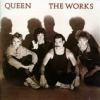
Music: Keep Passing the Open Windows by Queen and Trouble Again by Quiet Riot.

Queen: The Works
Buy these at Amazon.ca
Click Images to Buy
Quiet Riot: Down to the Bone

Labels: , , , , , , , ,