Wednesday, February 24, 2010

Role-Playing Game Run Down

As a writer, and therefore an editor I have cultivated a sense of judgment on various levels of what I read and watch. I put this to use as reviewer for the Bob's Reviews site. Likewise, whenever I set out to create a new product I use that critical eye to look at what is out there in the market and target concepts, methods, and procedures that could do with improvement. Familiarity with products in particular veins improves that sense of what could be done different or better--the two are not always exclusive with better being a matter of taste in some instances. I have a great familiarity with one product that I look to speak about specifically today and as long as it takes to cover the concepts I wish to discuss. That product is role-playing games.

Kevin Siembieda is famously known as saying that "RPGs are, after all, part novel, part text book, part instruction manual, part art book and all imagination." That's a good covering of the main facets of role-playing game books, but as far as games and their design goes it is not the entire story, not as far as I am concerned here. The games themselves are part collaborative story telling, part acting, part strategy, part chance, and all game. A lot of the time people gravitate to one of those more than the others, sometimes one or two. It all depends on the game, the personal goal in playing, and a likely host of other decisions and desires held in balance. A good game system, that is the core rules and setting, should offer many possibilities in each of those elements of the game.

One area where a game might fail, or not measure up is in the balance between strategy along with numbers and dice, and the art of telling a story. This can be a matter of one getting in the way of the other and bogging things down or hindering the smoothness of game play. The purpose of rules, and dice, known as the mechanics of the game, is to provide a framework upon which to tell the stories, set up the scenarios, make it a game rather than just writers or actors collaborating. There is a level of simulation involved, simulating physics, simulating character or psychology. How much it feels like a simulation or how much verisimilitude it doesn't or doesn't have is a frequent failure point for RPGs. There are a number of ways this can happen. Tune in next time for more.

Mood: declarative.
Music: Voodoo Medicine Man by Aerosmith and Harvester Of Sorrow by Metallica.
Aerosmith: Pump
Or get MP3s.
Buy these at Amazon.com
Click Images to Buy CDs
Metallica: ...And Justice for All
Or get MP3s.

Labels: , , , , , , , , ,

Wednesday, September 16, 2009

Surmounting Advantages

During the discussion of greatly enhanced healing in fantasy settings there came a question of what will some parties do to combat this advantage in their enemies. This is an important question not just in the circumstance of accelerated healing or of resurrection, but in general, both in gaming and in all fiction. For every advance or advantage there is a considered response to negate it. Those who do not have an advantage will want to copy the advantage for themselves, or barring that steal the other party's source for it. This push and pull, garner or steal, is another basis upon which to build conflict in stories. In gaming it is a consideration that the Game Master must make at every turn to keep the pace, the tension, and promote a surmountable challenge.

There are a few categories of elements that fit this mould. There is durability or immunity to harm, powers that cannot be defended against, normally inescapable circumstances, and overwhelming forces. These can be negated directly or indirectly. Direct negation requires stripping the individual(s) of the power or overwhelming it to the point it is not an issue. Disruption powers come into play or powers that are in opposition to the troubling one. Ice or water is used against fire, mind blocks prevent psychic attack or intrusion, and similar. Particular methods of killing cancel regeneration. Specific disposal of the body prevents it from rising from the dead. Then there are weaknesses built into characters such as deadly allergies to certain materials such as Superman and kryptonite.

Indirect negation can include circumventing the difficulty. Those invulnerable to damage may be suffocated or drowned. Those immune to fire may still be harmed by falling debris caused by a fire. The opponent may be the one that is immune to the character's abilities. All of these put a wrinkle in a game changing element or a power. They can only be used so often and put to smart use without negating the reason for having these capabilities in the setting, or unfairly treating the player of such a character by hobbling them unlike the other players. Tempering these changes to provide threat and tension is only desired in balance and when it enhances the storyline. It may even be better to turn the tables and have the protagonists seeking to deal such powerful foes.

Mood: tired.
Music: Welcome Home (Sanitarium) by Metallica and '39 by Queen.
Metallica: Master Of Puppets
Or get MP3s.
Now at Amazon.COM NOT CA.

Buy these at Amazon.com
Click Images to Buy
Queen: A Night at the Opera
Or get MP3s.

Labels: , , , , , , , ,

Wednesday, September 10, 2008

Anatomy of a Horror Setting #2-15: In All Things Balance, Or Not

The presupposition has been put forward that in a horrific magical setting there will be a moderate to great discrepancy in the quantity of evil versus that of good. This is especially true as it pertains to non-human beings. What has not been discussed yet is a matter of balance in the quality of power between good and evil, and to a lesser degree human and non-human. In the psychic horror setting there was frequent discussion about the balance of power. The power between the two moral sides was equal for the most part--there were no non-humans, negating that issue. Balance was something considered at practically every stage due to the great flexibility of the powers. This begs the following question. Why is there no talk of balance in the magical horror setting?

Magic is essentially an unbalancing thing. This is especially true of a world where the rules of science and physics hold sway. Since magic is an external force its limitations are not all that limited in terms of what it can accomplish. The actual limitations it has tend to be in knowledge, rather than power--though need not always be. For the sake of drama and conflict there are times of greater power upon which great miracles of light or darkness can be enacted, even when power is normally an issue. These high times of magic are used more often for evil. Good and beneficial acts mostly have low power requirements, or they are geared toward undoing evil magic. The horror nature of the setting also predicates that greater amounts of good energy are required to undo evil things.

The inclusion of non-human beings in a magic horror setting also needs to be inherently unbalanced overall. For them to be less powerful than humans, in the realms of magic specifically, puts them in a role as minion. This has its place, and numbers can make up for a lack of ability. When they are more powerful, such as when they are full-fledged devils, it puts them in the role of lead threat if not actually lead villain. These powerful positions call for them to be powerful, obviously, but beyond that can even require them to be a named individual. This means they are a renowned and specific creature, at least beyond the Earth. This renown on the surface may be as little as the being’s name appearing in an earthly magical tome, or that its name is whispered among those of power.

Mood: relaxed.
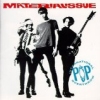
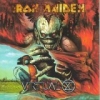
Music: Trouble by Material Issue and Lightning Strikes Twice by Iron Maiden.

Material Issue: International Pop Overthrow
Buy these at Amazon.ca
Click Images to Buy
Iron Maiden: Virtual XI

Labels: , , , , , , ,