Wednesday, November 10, 2010

Tired Trope Kick-out

I was watching what was a great series of horror shorts when one of the pieces comes out of the blue with an excessively overused trope that I am really sick of seeing. You know it very well too I bet. A person has information that could help the police once they get past the fact that it is a supernatural perpetrator. This in and of itself is not a story problem even as often I've seen it. Now, this informant meets with the detective on the case and starts in about how the detective will think the informant is crazy. Mistake number one. Certainly the informant is intelligent enough to know that it's hard to believe so why don't they think ahead to find a way around that? This is way too often made worse by how the informant came into this information about the supernatural, which is a part of the trope--and the worst of it all--that there was a previous case involving just such a modus operandi as the current crimes.

In the particular case of this series there is a further bit of information. The informant knows about the particulars not only because of the previous case, but also because a relative was directly involved in the old investigation. Yet, the informant never does what any reasonably intelligent mammal would do and start off the conversation with "Hi, my name is Clara and I have something to tell you about your case because my deceased grandfather was a crime scene photographer and I found old case files that seem just like what I saw in the news papers." No, instead the conversation goes, "You'll think I'm crazy... there's something unnatural going on... the victims eyes are missing..." and the detective immediately has suspect number one right in front of him because no one not on the case is supposed to know anything about the missing eyes.

Instead, why can't script writers--I have no idea if this trope is repeated in novels but I have to imagine it is--sidestep this tired, and frankly pretty lame from the first instance whenever that was trope? What happens if this and other overused plot devices are put aside? How will the stories differ? Sometimes movies with tongue firmly planted in cheek, or with an attitude that all of their competition sucks flaunt these ideas. Sometimes they even knock these scenarios with flare and style. Not all tropes are bad, just like stereotypes. The word trope itself refers to different things with the meaning I have here being in line with the idea of "TV tropes" rather than traditional literary tropes. I'm personally fond of a trope I like to call "heritage speaking" where intelligent, somewhat socially awkward, characters speak as if they come from an older time period, but it is instead actually a matter of their family's status and its link to stuffy archaic thought and speech.

Mood: breezy.
Music: Phantom of the Opera by Iron Maiden and The Phantom Opera Ghost by Iced Earth.

Iron Maiden: Iron Maiden
Or get MP3s.
Buy these at Amazon.com
Click Images to Buy CDs

Or get MP3s.

Labels: , , , , , , , , ,

Wednesday, August 12, 2009

Conceptions, Intuition, and Truthiness

The other day the following interesting article came to my attention. It was titled "Would You Wear a Serial Killer's Sweater?" It also asked, and I asked again on Twitter, "Would you fear the volunteer who did put on the sweater?" All sorts of factors surrounding social interactions, concepts of what is real and what isn't, intuition about what's real, among others, come into play in this discussion. This is a different tack toward the same kind of idea being explored here lately. All of them come together to build connections between the characters in a story, the plot, and both the expectations and impact upon the audience of the work. Many narratives carry one singular reality, whether or not it is an exact replication of the real world or something very fantastical and different.

How does the sweater play into this? First it does not matter that it is not actually a serial killer's sweater. The insinuation or claim that it is such is enough on its own. Likewise it does not matter that the item is laundered. It still carries the connotations as if it were still stained with the blood of the killer's victims. The idea makes people nervous and uncomfortable. Its proximity causes anger in some even before the outrageous request for someone to don it. It is a tainted item. Worse, that taint may rub off. Conceptually it is an artefact of evil. Fascination with it, shown by taking the offer to wear it, points to the evil nature of that volunteer. It is something that should be reviled and likely feared. Those not espousing such emotions are questionable. Or so the theory goes.

It is a gut instinct, an emotional response that the sweater is bad. This is the same intuitive sense people have upon learning of a person's criminal record. It is of course worse if the intuiting person is familiar with the exact crime, and hard to look past if it was violent. This all begs the question, which is more important, actual fact, or just perception of the truth of something? That word truthiness, trite as its origins are, and frightening as the concept is, seems to sum up the answer to that question as today's society would answer it. Perception is everything in a large segment of the population. This is something that can and should be capitalised on in fiction. It comes up on this blog more than once for a reason. It is depth well used for characterisation, direct plot, and secondary conflict.

Mood: airy.
Music: The Unforgiven III by Metallica and Inconclusion by Dee Snider.

Metallica: Death Magnetic
Or get MP3s.
Now at Amazon.COM NOT CA.

Buy these at Amazon.com
Click Images to Buy
Strangeland: Movie Soundtrack
Or get MP3s.

Labels: , , , , , , , ,

Wednesday, January 09, 2008

Anatomy of a Horror Setting #8: Psychic Crime and Villainy

Hello, and welcome to the 200th posting of R.G. Male's Dark Corners.

Up until now these discussions have looked more or less at the large impersonal scale or at society's defenders and champions. The real fun characters of these psychic settings are the villains. They are most fun for the writer, the game designer, and the game master who runs the completed game. Crime and the doing of evil are easier for a psychic than for a normal wrongdoer. This much is a given. The ways to put psychic powers to use in criminal acts range all across the spectrum from petty crime, to white-collar crime, to the most heinous acts some of which are unique to psychics. The one different thing about psychic evil is that amongst all of the kinds of evil out there psychic evil has a common theme. That theme is violation. Except for psychic crimes using only machines, or prognostication, the psychic violates someone.

A truncated list of petty crimes tailored to the use of psychic powers, most notably telekinesis, involves things like petty theft, simple assault, trespassing, and vandalism. A woman's bank machine withdrawal is yanked from the machine before she can grab it. A man beats another man without using foot, fist, or any weapon that witnesses could see. A psychic temporarily disables an electronic lock to enter an office building. White-collar crimes include fraud, bribery, and insider trading each of which can be perpetrated by the use of mind reading or prognostication. Then there are computer crimes committed by technopaths. These psychic manipulators of machines and technology are only one path to the duplication of currently mundane cyber-crime and fraud.

The other path of fraud slips into the realm of the more undesirable psychic form of collecting information, mind reading. At the most harmless level purposely plucking thoughts out of someone is violating them in a molestation kind of sense. Taking this idea further we come to forms of mental manipulation upon a person that anyone would consider seriously violating the victim such as psychic possession. Then there are the ways to use psychic powers to kill such as pain manipulation, crushing hearts, exploding heads, and spontaneous bleeding. Beyond the terrible deaths are the fates worse than death such as induced insanity, being trapped in nightmare filled comas, constant horrific hallucinations, and permanent paralysis for no physical reason at all.

Mood: celebratory.
Music: Tales Of Another Broken Home by Green Day and Kill Devil Hill by Bruce Dickinson.

Green Day: American Idiot
Buy these at Amazon.ca
Click Images to Buy
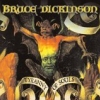
Bruce Dickinson: Tyranny of Souls

Labels: , , , , , , ,

Wednesday, December 05, 2007

Anatomy of a Horror Setting #6: Body of Evidence

Learning important crime fighting, terrorist thwarting, and life saving information by the use of psychic powers is great if it can be done. It could be a vital and vibrant part of the criminal incarceration process. It would put the right people in the right position to best defuse situations, and prevent loss of life at many levels of scale. Once the bad guys are stopped then comes the next stage. That stage is putting the villains away in jail for a long time, or depending on what almost happened a well deserved death sentence. Here is where the powers of psychics may come up incredibly short. It is not necessary that they fail, but that determination can be hard even if good sets of procedures and laws are put in place to accommodate for this new information stream.

In some cases the use of a psychic power, like for instance precognition, will lead to the discovery of hard, easily understood and established, evidence. Such an example could be explosive devices and building schematics. Is that evidence admissible in a court of law though? When does a psychic have the right to invade the privacy of another individual? That question should be answered in the world that has verifiable psychics that are recognised by the powers that be. However, what happens in a world where the psychics aren't recognised, and/or are in hiding? Right here the distinction should be made, that for a horror setting, that the psychics in question indeed are hiding, and therefore their knowledge is of no value to a court or a jury, directly.

How then does a psychic go about putting their information to use? The answer to that is that there are many different options. There is of course the eponymous anonymous tip. The psychic could be a police informant, having proven themselves to, likely, an individual officer, or a prosecutor. What happens though when there is no physical evidence? How then does a psychic go about preventing a disaster? Let's say the psychic has a vision that a neighbour is going to snap and kill his wife with a baseball bat. Until the neighbour is about to commit the crime there is no crime as far as the law is concerned. Even if the neighbour is a wife beater the police can't do anything until they catch him being violent, which will generally be too late. This is especially true if the psychic cannot nail down a time for the event.

Mood: stressed.
Music: My Global Mind by Queensryche and Picture Elvis by Moist.

Queensryche: Promised Land
Buy these at Amazon.ca
Click Images to Buy
Moist: Silver

Labels: , , , , , ,