Wednesday, January 26, 2011

To A Creepy New Year in 2011

Hello and welcome to the New Year of Horror on Hump Day! It's been a long hiatus, though maybe not the longest I've taken. Publishing a horror magazine will do that, even at the length of Killing Time - Horror E-Rag. It's become something of a tradition to look back and then look forward. Let us begin.

Looking back I am immediately struck by the recent posts about movies and television both before and after Hallowe'en's thirteen blogs. Both by the number and the ideas I hoped to express about them. There was even some motivational material, because honestly with all the negativity out there about the genre and its failings someone has to get on topic, push forward, and try to be a force of change.

To some degree it's a sad state of affairs that it has to be me, but really who better? I've always been trying to push for better horror, and painting the way as a consumer. Some could ask, who am I tell to anyone how to make something better? The answer is, I'm someone who enjoys horror so much I had to become a creator. Even that much commitment isn't necessary. All it takes is a passion for the material, the movies, the books, the games, the tropes, the feelings, the whole shebang.

The look back became the look forward. Might as well continue mixing it up. The past year I talked about a setting with witches, and more pertinent to the discussion witch hunters. It's kind of funny because I recently saw the animated video for "American Witch" NSFW by Rob Zombie, which seemed to me to be a companion piece to the "Lords of Salem" NSFW video, which I had seen significantly longer ago. The Lords video is very evocative of just how frightening the Witch Hunter General and his closest men are, to not only the common man, but also to even the blackest hearted witch.

I intend to look at some more settings. Like early in 2010 I also intend to look at horror from a RPGer's perspective because what is a pen and paper RPG for the person running the sessions (known as the Game Master among other names), a position akin to director on a movie set and at the same time scriptwriter--if both of those only worked with or wrote the minor characters and the setting/sets. I'm re-explaining this both for new readers and because there's been some recent controversy, but that's not something I intend to get into here. Beyond that, I never know what I'm going to write about until I start planning for the next week. Here's to new horrors and new looks at it.

Mood: stoked.
Music: American Witch by Rob Zombie and Werewolf Women Of The SS by Rob Zombie.

Rob Zombie: Educated Horses
Or get MP3s.
Buy these at Amazon.com
Click Images to Buy CDs
Rob Zombie: Hellbilly Deluxe 2
Or get MP3s.

Labels: , , , , , , , , , , , ,

Wednesday, March 10, 2010

The Risk to Remain Tight in a Bud

Previously on R.G. Male's Dark Corners... I set up some information for those uninitiated in the greatness of role-playing games, particularly the pen and paper kind that come with books and people track things and do everything more or less by hand or keyboard. Last week I discussed the unrealistic method of character advancement known as levels, whereupon reaching a new level of experience the character has an explosion of growth, as opposed to a more natural progression. This leaves us with the need to look at how to bring that sense of realism, or verisimilitude back to the mechanics of the game. Advancement of your playing character within the game is one of the best ways of gauging how well the game is going. It's like winning in a game where there isn't real winning or losing because, as a story shared among friends, the journey is more important than the destination.

Rather than levels where everything advances all at once some games measure progress incrementally. The Game Master takes note of when a skill is used, or the players track it themselves, and after so many successes--or in the best systems a measure of losses as well, since mistakes are important to the learning progress--the skill is advanced. This is a fair simulation of the real world. The same process is applied to powers that the character has whether that is super powers, psychic abilities, or magic. This is particularly useful to magic systems involving learned incantations and rituals. The other side of the coin in this incremental advancement is that the character is required to practice and study. This is especially true of picking up new skills, learning new spells or creating new magic. However it does have its issues with psychic abilities and super powers.

Depending on the setting, and the mood it looks to evoke, psychic abilities may not be something that is learned. The power is either there waiting to be unlocked or it is not there at all. Super powers tend to be dependent upon time for their advancement or exposure to new catalysts that cause new powers to develop. This is not to say that existing powers do not advance just as skills do, and characters should ultimately learn new tricks with use of existing powers even if they are not expressed in the mechanics. For the new powers and abilities a system must be in place that works in parallel with skill advancement or on a time scale. The problem with a time scale is that a game could run only hours at a time within the setting or stretch out for weeks in game. This leads to slow or fast power gain respectively. Tune in next time for some options to deal with this.

Mood: excited.
Music: Good Enough by Van Halen and Better by Guns N' Roses.

Van Halen: 5150
Or get MP3s.
Buy these at Amazon.com
Click Images to Buy CDs
Guns N' Roses: Chinese Democracy
Or get MP3s.

Labels: , , , , , , , ,

Wednesday, March 03, 2010

A False Sense of Growth

Sometimes a role-playing game will use a set of mechanics, a.k.a. rules, to simulate a facet of the real world in a less than realistic manner. There are a number of reasons for doing this, the primary one being simplicity. The most prominent of these convenience simplifications is the level system. For those that don't know, the level system involves earning points that represent the growth of a character in the game. The points are experience points and many games refer to them as XP with the X standing for experience. XP rules can exist without a level system, but I'm not aware of any level systems without XP or a similar concept because the level system is co-dependent. A character reaches a new level after every so many XP earned. This is where the level system fails.

When characters reach a new level of experience--these are usually characters run by the players--they improve their skills and abilities. This is a vital part of the gaming process. The problem, the artificial quality, is that everything improves all at once. All of the character's skills are raised by a level, even if they haven't been used recently or at all. New powers or spells or psychic abilities, etc. suddenly appear to the character from out of the blue. Bonuses are applied to different combat rolls that didn't have such high bonuses before or maybe no bonuses at all. The changes all occur without training, instruction, or time spent mastering them. The new abilities and bonuses do not even have to have any tie to existing ones or reflect a previous desire for growth in the character.

Players and Game Masters take it upon themselves to fix this falseness to some degree by saying that characters practice their craft, self-teach themselves things, and plan ahead for the future that will be represented when that character gains a new level. Occasionally a game will suggest this as well. Spell casters are known to research books and at times, according to the setting's mood and details, settle down and meditate upon the world and their place in it, and from this they gain insight, which informs their new spells, or the idea to research specific spells. Most of the time though this is a stretch and as something glossed over it lacks a certain depth and feel. It does not deal with the improvement flood all at once either. Next time we'll look at a better way.

Mood: forward-thinking.
Music: The Iron Road by Widomaker and Fake by Motley Crue.

Widomaker: Stand By For Pain
Or get MP3s.
Buy these at Amazon.com
Click Images to Buy CDs
Motley Crue: New Tattoo
Or get MP3s.

Labels: , , , , , , , , ,

Wednesday, September 23, 2009

We're All Going to Die Terribly

One of the important parts of planning and running a role-playing game is the same as plotting a novel or writing a script. It is about managing threat levels. Doing this has a cascade effect that impacts pacing, tension, horror--if that is your angle--and mood. Take the ever-popular zombie apocalypse. The threat level is high any time that the characters are out in the world rather than sitting in their safety zones. Even in the safety of their sanctuaries all of the dangers of the old world loom around every corner. A pall hangs over everything because the walking dead dominate the mental landscape as much as the external one. This makes for constant inescapable tension. The dark mood is always an instant away only to be forgotten briefly.

This general look at the threat level of the setting is just that, only an overview. Scaling down to the level of specific encounters the danger presented to the protagonists can only reach a certain pitch. The protagonists must be able to survive--at least until the end, since they can only be killed once. There must be some way out of every situation. Something natural or organic and not forced or contrived. By the same token it should not be a cakewalk either. A balance must be struck. In a game luck can be a factor that brings disastrous results with even the most balance encounter. An author or scriptwriter can bend luck to their will on the other hand, again only in a way that seems genuine. Either way there needs to be room for adjustment.

A threat level system became a part of AD&D recently--in terms of the game's long history--to the joy of some and derision of others. It is a quick and easy way to say this many player characters of this level of power should fight these, these or those. It can be rigid and by the nature of its existence can drain away some of the tension, especially if the players know the Game Master is sticking by it. The player will likely even be familiar enough that they can tell an encounter is safely balanced. This tension draining phenomena can happen even with fiction, and especially scripts for television. Certain characters just aren't going to die. There will be an out to almost any situation that seems hopeless. Some things just are not going to change or come to an end.

Mood: open.

Music: Too Much, Too Soon by Green Day and It ('s A Monster) by Extreme.

Green Day: American Idiot
Or get MP3s.
Now at Amazon.COM NOT CA.

Buy these at Amazon.com
Click Images to Buy
Extreme: Pornograffitti
Or get MP3s.


Labels: , , , , , , , , ,

Wednesday, October 10, 2007

Anatomy of a Horror Setting #1:
Psychic Powers

In working on my psychic horror game there are several considerations I have had to make, and several more yet to be decided upon. In this first article of how many I do not know, I will start with my first point of necessity, and the considerations that it entailed. Later articles will take a look at these considerations as required.

The first requirement was that it was going to be a horror game. I of course set out to make a game with psychic powers so there was the second game priority. While I am discussing my game these ideas in no way need be relegated to role-playing games, they should work perfectly for any short story, novel, or movie setting within the genre. The limiting factor will be the inclusion of psychic phenomena though by no means will it be inclusive to humans for other people's setting purposes or any other settings I might pursue.

For a horror setting with psychics you first need to set out a list of the powers that you want to see. Next you need to look at how these powers will work. This requires looking at how the powers work in the following ways. First, what cost is there to using the powers? It can be none, it can be some kind of psychic points, it can be physical fatigue, and it can be mental fatigue. Next, are there any downsides to using the powers too much aside from any associated cost? The downsides of fatigue are obvious. Certainly sometime the use of such supernatural power has a negative impact, such as nosebleeds, and headaches if the powers come "naturally".

A psychic not need to be born with the powers or have them flourish on their own at the onset of puberty (a common time in fiction). The powers could be granted by a supernatural entity, or they could be the result of experimentation. These ideas alone open up a lot more vistas of possible exploration in your setting than just having the psychic abilities innately. They also express another important facet of a psychic horror setting, how does the rest of the world react to these phenomena and the people who wield such powers? Something for next time.

Mood: crisp.
Music: You Are all That I Need by Twisted Sister and You're All I Need by Motley Crue.

Twisted Sister: Love is for Suckers
Buy these at Amazon.ca
Click Images to Buy
Motley Crue: Girls Girls Girls

Labels: , , , , ,

Monday, April 16, 2007

More Power and Shifting Responsibilities

I have been working on a little game related project using HTML. The game is Rifts®; the project is to make a more powerful character sheet for one specific character type in the main book of the game. That class is called the Shifter. It's a re-imagining of the classic Summoner from PFRPG®, which is a pretty easily imagined type of character just from the name and the fact it exists in a fantasy game.

Throughout the span of time that Rifts® has been out there the Shifter class has undergone some changes. The most important of these changes has been the addition of the Minion rules. From the outset the Shifter has always been able to, and meant to, summon up creatures and put them to use for whatever task the Shifter had in mind when deciding upon what to summon. However these helpers were fleeting and finding the time to summon things could be an issue, especially with some unhelpful GMs.

The Minion rules, and this is just a name I've given them to easily reference them, allow the Shifter to collect "permanent" helpers at select levels. I won't speculate on where the idea did or did not come from because I don't care. The importance is this addition gave the Shifter a leg up as the Rifts® world became tougher and more dangerous. As a matter of personal preference my first choice for a Shifter character's minions is entities. Two imp-like beings, or two entities count as one minion.

My project then was to include as much information about the Shifter's minions on the HTML character sheet as possible. To that end I built in an inline frame to contain the list of minions and linked to that IFRAME (for those knowledgeable about HTML) a second one where descriptions of the powers can be read. It's quite excellent. Of course this is a purely personal resource, because any distribution of that level of information would be a breach of Palladium Books®'s copyrights. However this is a good exercise in co-ordinating information and using higher level HTML and similar coding. Otherwise I wouldn't have brought it up.

Mood: exhausted.
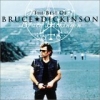
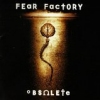
Music: Wicker Man (1997) by Bruce Dickinson and Obsolete by Fear Factory.

The Best of Bruce Dickinson
Buy these at Amazon.ca
Click Images to Buy
Fear Factory: Obsolete

Labels: , , , , , , , , ,