Wednesday, April 14, 2010

Magic Power Point Presentation

When it comes to the mechanics of magic in a role-playing game two options rise to the top of the list as far as importance. The first is the number of points with which a character has access to for the casting of spells. The second as discussed last week is the time it takes to cast the spell. The points portion of the mechanics can be broken down into several factors that must be considered and balanced. It can be difficult to discern what to deal with first. There is the need to determine the number of points required to cast each and every spell. There is also the number of points to which any single character will have access. It makes sense to determine the spell costs first. Doing that requires starting with the low-end costs and building up to the more costly and thus more impressive and powerful spells, but how to weight them?

The cost of one spell compared to another should be based upon many different factors. These factors can include how long the effect of the spell lasts, how far the effect can be cast away from the spell caster, how large of an area the spell affects, and just how powerful is the effect? What determines how powerful or impressive a spell is? Does it depend on game factors like damage? Is it more powerful if it affects multiple people? Does it matter if it is flamboyant or a spectacle to see? Is it a matter of how much it bends reality and defies the known laws of physics? Is it about the way it can change the playing field and alter the storyline? This last is hard to quantify. Death is a game changing matter when it comes to the players, the protagonists of the story. How does a powerful spell affect the setting if too many can cast it?

Once at least a rough baseline is set for the cost of spells then a look can be taken at how many points to which a single character or player should immediately have access. Factors for consideration include how many spells in rapid succession should a player be able to cast? This will also require knowledge about the other types of characters available so that the spell cast does not run out of options long before his companions. How powerful is a starting spell caster? How should they progress in power? Both of these should be compared to other character types as well, to maintain fairness and promote players to choose a spell caster. From a points standpoint there is an advantage to having more than one spell caster in the player party. Leaving points aside are there other advantages to multiple casters?

Mood: eclectic.
Music: Soma City Ward by Slash and Kill or Be Killed by Twisted Sister.

Slash's Snakepit: It's Five O'clock Somewhere
Or get MP3s.
Buy these at Amazon.com
Click Images to Buy CDs
Twisted Sister: Come Out and Play
Or get MP3s.

Labels: , , , , , , ,

Friday, October 30, 2009

13 Nights of Hallowe'en 2009: Night #12 The Crow

The night before Hallowe'en is infamously known as Devil's Night and is a time of trouble ranging from the annoying to the destructive to the violent. In some places, like Detroit, Devil's Night was known for its record number of arson cases. The Crow is one of the few movies about the night, which is somewhat understandable with Hallowe'en being a much juicier target. The Crow isn't necessarily a horror movie even though it is in the vein. It's more of a dark action movie. It is also one of those rare movies where the star met with an untimely death on the set with the accident that took Brandon Lee's life. The filmmakers turned the movie into something of an homage to this young talent. They also did an excellent job of completing the film in his absence.

When I first saw The Crow at the theatre I was left with two impressions. The first was that this was a very special movie. The second, during the viewing, was that it pulled in a lot of ideas from different places and had that feeling of reusing bits of others films. What is odd about this second impression is that it very quickly faded. Whatever movies I felt The Crow borrowed from were quickly subsumed by the movie and I quickly could not recall any of them, those elements, themes, and scenes now belong to The Crow. Put together with the rest of the movie they no longer belong to the original sources in any kind of important way, as odd as that sounds. As for The Crow's original graphic novels I only know what I've heard in the DVD extras plus a little from additional bits in the TV series.

Mood: mellow.
Music: Dead Souls by Nine Inch Nails off of The Crow: Original Motion Picture Soundtrack

Labels: , , , , , , , , , , , , , ,

Wednesday, August 05, 2009

Bad Blurring of the Lines

On Twitter there is a sprawling community that is rancid, rank, and utterly decadent. This community prides itself on these virtues in mock-physical sense. They are zombie fans. Some of them purposefully obliterate the line between fiction and reality in their communications. They are in essence role-playing on Twitter as zombies. Their antics are as funny sometimes as they must inevitably be disturbing to non-fans of zombie movies and fiction. It is easy to image the horror and indignation of the horror uninitiated in response to the outlandish and gruesome posts. A fan of horror and of zombies can really get into most of what they do. They are awfully witty and comedic for the walking, ravenous dead. They have the most interesting and not for safe work outlook as well.

There is one trend that has developed recently that bears consideration. It also seems to be ill conceived and for once in bad taste regardless of the popularity of it, and the popularity of zombies and horror. Not everyone is jumping on the bandwagon and there is no apparent backlash against it. The trend is to equate the H1N1 virus, otherwise known as human communicable swine flu, with a new and real zombie outbreak and ultimately a start to a zombie apocalypse. Now, it's not the disease factor that is the problem, nor the idea of a zombie apocalypse. There is a great Facebook group called The Hardest Part of a Zombie Apocalypse Will be Pretending I'm Not Excited which expresses the normal sentiment of zombie fans.

It is not even either of these ideas, but at the same time they do lend to the unease of this blurring of the line of reality. The first fear is that some people who are not aware of the fact that this is fictional masquerading as real will get the wrong idea and spread panic like wild-fire. The second is that such a pairing of a real disease, which has resulted in the real deaths of people, with a fictional milieu is insulting to those who have died. A virus that causes the dead to rise is nothing new. Neither is fiction revolving around death by contagion. Something about it just doesn't sit right though and the sooner the trend is over the better. This speaks to what is acceptable, where the line is between the shock and the horror desired, and just being distasteful.

Mood: smooth.

Music: Rock, Rock by Kevin Dubrow and Thrills In The Night by Kiss.

Various: Leppardmania - A Tribute to Def Leppard
Or get MP3s.
Now at Amazon.COM NOT CA.

Buy these at Amazon.com
Click Images to Buy
Kiss: Animalize
Or get MP3s.


Labels: , , , , , , , ,

Tuesday, August 07, 2007

Post-Climactic Hijinks

R.G. Male ©2007 Excerpted from "Unnamed Psychic Horror Game"

It's perhaps not universal, but there seems to be an interest in what happens after a novel is over, or the credits roll on a movie, and the characters go back to their real and supposedly normal lives. This begs the question, what if you were to run a game that takes place after all of the action, after the horror story is over and done? This isn't such an odd idea for a story or movie script but it may be fresh territory for gaming. Sure the result could be pretty dull depending on what goes on, what the characters are like, what kind of lives they lead and how they continue to interact or not interact. Here's where specific injections into the idea make for an excellent time.

During this game, all of the characters only have dim recollections of what happened. They remember bits and pieces... often in dreams and nightmares, sometimes unbidden when they are awake and a sight or a smell reminds them of one of the events that happened. When the memory comes back to them, one of two things can happen. 1) The GM tells them a little snippet of something that happened. Never a full "scene", just a touch of it, a taste like the acrid flavour of bile, and the burning in the back of your throat that comes with it. 2) The recollection is a flashback of the entire scene, with however many (or all) of the players involved, as needed, which you play out as normal.

R.G. Male ©2007 Excerpted from "Unnamed Psychic Horror Game"

In this way the story unfolds unlike any other, but yet the aftermath of things can be dealt with, and the taint upon the character's lives as these memories surface explored. One question that immediately comes to mind is to how to handle what happens if one of the players dies during a flashback. This opens up a couple avenues of mind-bending goodness, if you let it happen.

Maybe out of all of the flashbacks not everything is entirely true. There could be layers, where one flashback is actually is a dream and not a flashback. Depending on mood and setting demands maybe the death was not really a death but a really close miss. It wasn't as bad as it looked, or someone, something, some force healed them. Maybe the characters' lives after the big event are what are not true. This is certainly a tried and true twist. It shouldn't be over done though, and requires skill and finesse not to butcher it.

Then there is the idea that maybe the one killed is a ghost and nobody knows it. This means the person themself does not know they are dead. Imagine if the person is dead, and people all around him don't notice. As long as no one thoughtlessly walks through the ghost or vice versa then the illusion would remain complete as long as they can still pick things up. I would suggest them not having physical contact with other people and that mechanism being that which exposes the deception. Or what if they were the walking dead, animated flesh driven by untethered consciousness and telekinesis?

R.G. Male ©2007 Excerpted from "Unnamed Psychic Horror Game"

Mood: woollen.
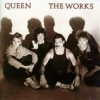
Music: Keep Passing the Open Windows by Queen and Trouble Again by Quiet Riot.

Queen: The Works
Buy these at Amazon.ca
Click Images to Buy
Quiet Riot: Down to the Bone

Labels: , , , , , , , ,

Wednesday, March 07, 2007

Dying to Tell You

Death is a huge universal fear. The fear of it covers the spectrum from suffering instead of dying, to the act of dying, to what happens after the person is dead (in several senses). This is added to the fact that eventually death happens to everyone. In fact the difference of when it is going to happen might even be the biggest cause of fear over the event. Certainly most people would prefer that it be later than sooner.

It can be argued that where it applies it is the fear of death that holds the greatest horror where the story is concerned. A monster may be all ugly and scary looking, and it may have unnatural powers, but just how much can a person get worked up over unnatural powers or goings on compared to the results of such things. In fact for the most parts results are what matters the most.

As a result, death would have to be the final result, at least as far as the world of the living is concerned. Beyond the fear of what it is like to die is the set of ideas with respect to what happens afterward. From a physical stand point there is ceasing to be able to interact with others, and the degradation of the body. Then, if a person subscribes to the idea that there is nothing after death it could be a fairly low level fear because once it comes there is nothing more to worry about.

For the people that believe there is a judgment to be placed upon them after death then death can be even more frightening yet. If the judgment was to be against them then things could only get worse. That's a pretty heavy weight if the person thinks that result is likely, especially given it usually leads to eternal torment. That has to be the worst. If that's what awaits them, then as it's been said, "Do not go gentle into that good night."

Mood: even.
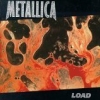
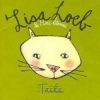
Music: Hero of the Day by Metallica and Do You Sleep? by Lisa Loeb & Nine Stories.

Metallica: Load
Buy these at Amazon.ca
Click Images to Buy
Lisa Loeb & Nine Stories: Tails

Labels: , , , , , ,