Wednesday, September 03, 2008

Anatomy of a Horror Setting #2-14: Of Good and Evil

The last section of the previous discussion about things from beyond presupposes that the morality of otherworldly creatures is evil. This is certainly advantageous to the creation of horror, but by no means is it a necessity. Inhuman beings can be starkly good or evil, or they can be more like humans and exist within the grey areas in between to the two. Likewise, horror also can have a distinct preponderance of evil in general. This goes beyond the usual narrative conflict of person versus person, or in many of these cases, person versus the supernatural. In the magical horror setting, more so than the psychic horror setting, the question of morality applies more directly to both the schools of magic as well as to the spells and rituals themselves.

Magic can be thought of as a force of super-nature--beyond nature as we understand it. If magic is such a thing then like gravity or magnetism it is neither inherently good nor evil. In such a framework the morality of magic, and of the spells cast using it, is entirely dependent upon the intent of the being bending the force to his, her, or its will. This need not be the way that magic is approached in a horror setting though. Magic can be something integral to the force of some being’s wills, which doesn’t change its moral dependency on the user. Alternatively magic can be directly a force of evil. It may be born of evil supernatural beings, or is an expression of chaos or entropy, or it may come about because evil is a distinct commodity or force all its own.

Magic need not be a singular force either. It is entirely possible to work with a world/setting view where there are two magical energies, good and evil energies. In such a case it is even more important to consider the power of setting up kinds of resonance between the energy being used, the modes and methods of the rituals, and the emotional state and intent of those harnessing the magic. A physical component such as a ritual sacrifice is then something more than just tapping into a battery. The sacrifice now imparts its qualities to more than just the formula of the spell; it infuses the entirety of the process. This in turn affects other parts of the setting. Following the theory that like attracts like leads to a need for some kind of balance, if only for the safety of the spell caster.

Mood: heavy.
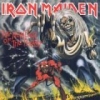
Music: Power and the Glory by Twisted Sister and Children of the Damned by Iron Maiden.
Twisted Sister: You Can't Stop Rock and Roll
Buy these at Amazon.ca
Click Images to Buy
Iron Maiden: Number of the Beast

Labels: , , , , , , , , , ,

Wednesday, July 23, 2008

Anatomy of a Horror Setting #2-8: Things Man Was Not Meant to Read

Books of spells are a staple of much magical fantasy. They are written and wielded by bearded men in pointy hats and long blue droopy-sleeved robes with silver stars and moons on them. In horror though the books far eclipse the men, women, and children who use them. The authors of these dark books are often irrelevant. Instead the focus is on the content and the materials of which the book is made. The prime example is the “Naturan Demanto” which was bound in human flesh and inked in blood. It is more physically impressive than its famous cousins the “Necronomicon” books--the “Al Azif”; later in history renamed the Necronomicon, and the “Egyptian Book of the Dead”. Other unrelated tomes include the “De Vermis Mysteriis”, the “Book of Eibon”.

The bulk of the dark evil books are roughly divided between two of the schools of magic previously discussed. The first half deals with Necromancy. This is a fitting choice of medium for passing on information given the need to illustrate the practices and procedures for working with bits and pieces of anatomy, as well as the drawings of the pieces themselves. The other half deals with conjurations and summonings, where the magical circles and symbols need to be depicted accurately. Incantations tend more to be passed on verbally, especially since somatic or movement components are required and hard to express in word or drawings. Some texts exist on alchemy, but they are few beyond the diaries and journals of the alchemists.

The generally more modern settings of horror add a distinct dimension to the locations within which these vile magical manuals rest. The books reside in the restricted sections of dusty University libraries. Conversely they can be lovingly shelved in personal collections obscured by numerous volumes hiding the evil trees in the forest. Others yet are locked away in trunks hidden at the back of attics. This is not say that these same books do not exist in more fantasy-based locals. Such places include sitting upon alters in long hidden cities, guarded by the restless dead. They can be in the walled up tower of a castle. Or they can be clutched in dead hands in a crypt, or casket nestled into the ground. Wherever they are someone always finds them and then the malign fun begins.

Mood: studious.
Music: Lights in the Sky by Nine Inch Nails and Welcome Home (Sanitarium) by Rockabye Baby!.

Nine Inch Nails: Slip
Buy these at Amazon.ca
Click Images to Buy
Rockabye Baby!: Lullaby Renditions of Metallica

Labels: , , , , ,

Wednesday, May 21, 2008

Anatomy of a Horror Setting #2-7: Casting About

The schools of magic have been laid out now. A number of questions have been asked and answered. There are always more questions, but now it is time to ask and answer them as they pertain to the actual casting of spells, and the performing of magic rituals. To review the casting of spells requires certain elements. First someone or something has to cast the spell. Then there are components. First and most common are verbal components. These are the magic words and the chants. Then come the somatic or movement components. These are the magic symbols drawn in the air or formed by the hands and the special dances. Lastly are material components. These are the materials to draw circles such as wax, the need for blood in a ritual, and herbs or animal parts.

The first question to be asked before getting into the details of what components are needed for which spells is, are the components required set in stone? This question asks, essentially, is magic rigid and inflexible? Must every single person meaning to cast a specific spell follow the same set of instructions? For that matter, can a spell be altered? On the other hand, can spells be made up on the spot? Can they be modified or expanded? For a horror setting the best answer is that magic is inflexible, and immutable. Magic as a changeable thing leads to a brighter view perhaps, or at least an adventurous mood. Certainly though, experimentation could be given dark complications, and frightening costs, to offset the pioneering feel of blazing new magical paths.

Now that the components are set, they can be determined. The verbal components of a spell can be in the caster's native language, in an archaic language, in Latin or Greek or Hebrew. It can even be in an inhuman language. Somatic requirements are pretty hard to nail down in writing and just glossing over them mostly is best. Material components include staples such as the blood of virgins, eye of newt, holy water, and sacrifices. The components need not be the same old same old. Some of the requirements can be dreamt up and odd. For example, a book may be required beyond being a reference on how to cast a spell. The book may be imbued with magic. The writing in it may be impossible to recreate, it may even be moving text and symbols.

Mood: lethargic.
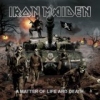
Music: I'd Do Anything for Love (But I Won't Do That) by Meat Loaf and Out of the Shadows by Iron Maiden.

Meat Loaf: Bat Out of Hell II
Buy these at Amazon.ca
Click Images to Buy
Iron Maiden: A Matter of Life and Death

Labels: , , , , ,

Wednesday, May 14, 2008

Anatomy of a Horror Setting #2-6: Pure Magic

Alchemy at its roots is about purity. The most famous example is the transmutation, or transforming, of base and low value metals into purer, more expensive metals such as silver, and the ultimate goal, gold. The most sought after example of alchemical excellence is the change from the corruptible and limited mortal life to the incorruptible form endowed by achieving immortality. Some Alchemists have even sought to purify the soul or essence or mind. It is in the lower hanging fruit of this school of magic and the spaces between these loftiest goals that most of the practitioners perform their magic. Their foci are chemical, metallurgical, pharmaceutical, horticultural, and enlightenment. Then there is the fusion of magic and the mundane.

Where the Conjurer might benefit from being their own kind of MacGyver, the Alchemist needs to an engineer or a doctor or a scientist. As such the Alchemist works mainly in physical components. Some of those components are of a pseudo-magical nature, others are entirely magical, but these substances and items are tools upon which the magic is focused, emanates, and acts upon other natural, non-magical materials and parts or devices. From an outside perspective, and from looking at the results the magic of, Alchemy does not seem all that magical. That can be changed the more fantastical the results are. Transmutation can be a less than full change too. Something wooden can be given characteristics of metal or stone. Even greater changes are possible.

Why limit Alchemy to changing lead into gold? The alteration of the physical properties of something can extend from density, hardness, and temperature characteristics, to swapping qualities like hot and cold, dry and wet, light and darkness, or solid, liquid, and gas. These more extreme examples can be a stepping-stone to the ultimate low-level alchemical feat, the fusion of magic and non-magic. The Alchemist can instil purity into impure things by imbuing them with magic and elevating them from their humble origins. So, where is the horror in this all? It starts in the mood of Alchemy as an almost fringe science and stems from otherworldliness. It can come from strange glowing trees or from simple incurable poisons or weird unstoppable plagues.

Mood: open.
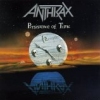
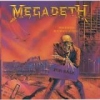
Music: Time by Anthrax and Peace Sells by Megadeth.

Anthrax: Persistence of Time
Buy these at Amazon.ca
Click Images to Buy
Megadeth: Peace Sells...But Whos Buying?

Labels: , , , , , , , ,

Wednesday, May 07, 2008

Anatomy of a Horror Setting #2-5: The Luckless Dead

A number of cliches fall by the wayside with the introduction of the most horrific school of magic going, Necromancy. Dead men tell no tales. They do to the Necromancer. The lucky ones are the ones who died. They don't feel that way when the Necromancer gets their hands on them. There are only two things in this world that are inevitable, death and taxes. The Necromancer can't help with your taxes, though the taxman attacked by one might wish otherwise. The Necromancer can make sure that the finality of death is anything but a certainty. Even the epitaph "Rest in Peace" holds no sway. There isn't even necessarily any respite for the cremated either. Not flesh, bone, blood, ashes, or the essence of a person is safe from this monster of a magician.

This leads to the first question asked for a setting where Necromancy will be introduced. If some other aspect hasn't already asked it for, now it must be decided, do people have souls, spirits, or similar, that live on after the death of the body? If the answer is yes then they fall under the power of this school of magic. The full repertoire of the Necromancer is available. If the answer is no, then some avenues of horror need to be set aside, but not all of them. A victim's consciousness may be used in place of a soul in many an evil binding. It just requires tighter control over the timeline. A consciousness is more fragile and decidedly fleeting in comparison to a spirit. Then, beyond the living consciousness, are their echoes, which may stand in as ghosts.

Perhaps an atypical use of Necromancy is the use of bodily materials in modifying, or enhancing the Necromancer. This begins with the comparatively innocuous imbibing of blood to gain strength, or bathing in it to maintain youth. From there the Necromancy might make personal use of an additional limb, or organ, including sensory organs. A different approach could be the creation of living dead monstrosities that will make people wish for the halcyon days of only having to deal with zombies. Then there are the undead, the vampires. Will Necromancers have any power over the children of the night? They are biologically dead, for the most part, depending on the setting. Either way, the vampires can be friend or foe, beyond just being more parts to put to use.

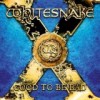
Music: Good To Be Bad by Whitesnake and The Golden Age Of Rock 'n' Roll by Def Leppard.

Whitesnake: Good To Be Bad
Buy these at Amazon.ca
Click Images to Buy
Def Leppard: Yeah!

Labels: , , , , , ,

Wednesday, April 16, 2008

Anatomy of a Horror Setting #2-2: No Porcine Blemishes Here

There are a number of choices when dealing with schools of magic in a horror setting. The options start with the author of the setting and move from there to the recipients of the magical skills, the characters, whether they be novel or movie character's or the characters played in a role-playing game. As previously mentioned there are some sticking points or ways in which there is some fundamental semantic confusion about where the ways in which magic is cast ends and the so-called schools of magic begin. Setting those aside, some solid examples of the kind of magic suitable for a horrific setting include Invocation, Conjuration, Summoning, Necromancy, and Alchemy or Alteration. Even among these there is some overlap and defining necessary.

For instance, Invocation is a loaded term with more than one avenue covered by its use as a name for a kind of magic. What the person is invoking can essentially be one of two things. The first is some tangible or discrete-unto-itself kind of entity or being whether it is a god or a devil, a spirit being, or the caster's ancestors. The second is to invoke just power, or the essence of magic itself, to perform the magical act. The division could be made that calling upon some being is Invocation, while calling upon energies is Evocation.

Likewise there is a connection between Conjuration and Summoning. Both involve making things appear. Conjuring something could lend itself to a physical result, or in only an intangible manifestation such a spirit depending on how those are defined. Summoning typically involves the bringing of a living creature, or some kind of being from some other level of existence, to the spell caster. Using that as an anchor, and casting aside the conjuring of spirits to the realm of the Necromancer, Conjuring should be the creation of materials and inanimate objects through the use of magic.

Necromancy--aside from conjuring, summoning, and forcing the appearance of spirits--covers such magical areas as the raising of zombies, binding spirits and entities, and gathering power from death. It is the darkest school of magic and prone to the worst atrocities committed in its pursuit. Desecration of the dead is a must, and eternal torment is their forte. In contrast to the creation of Conjuring, Alchemy is about altering existing things. The prime example of Alchemy is transmutation--turning one element into another, such as lead to gold. Alchemy basically is the chemistry of magic. It should cover magic powders, potions, ointments and anything of a direct physical nature. It would also cover the mystical arts of healing via draughts on through to converting emotional and spiritual energies.

Music: Thin Line Between Love and Hate by Iron Maiden and Ten Thousand Strong by Iced Earth.

Iron Maiden: Brave New World
Buy these at Amazon.ca
Click Images to Buy
Iced Earth: Framing Armageddon - Something Wicked: Pt. 1

Labels: , , , , ,